
Concrete flooring can compromise dairy cow welfare by increasing the risk of slipping, accelerating hoof wear and providing insufficient cushioning for prolonged standing and walking. These conditions can contribute to lameness, injuries and reduced lying time, particularly in housed dairy systems where cows spend extended periods off pasture.
Concrete is the default dairy farm flooring across New Zealand. It's durable, easy to scrape and wash down, and relatively affordable to lay across yards, feedpads and barns. The trouble is that cows were never designed to spend long hours on it, and a hard, unforgiving surface puts strain on their feet, legs and joints every time they stand, walk or turn.
As more farms bring cows off paddock into barns and other cow housing for wintering, supplementary feeding or wet-weather protection, the time cows spend on concrete keeps climbing. That makes flooring one of the biggest (and most overlooked) factors in dairy cattle welfare.
Key takeaways: How concrete floors harm dairy cows
Concrete floors can negatively affect dairy cow welfare by increasing the risk of slipping, hoof abrasion, sole bruising and lameness. Unlike softer surfaces, concrete provides little cushioning for cows' feet and joints, particularly when they spend extended periods standing or walking in housed environments. Installing rubber matting in high-traffic areas, alongside good hoof care and farm management, can help improve traction, reduce pressure and create more comfortable conditions for dairy cows.
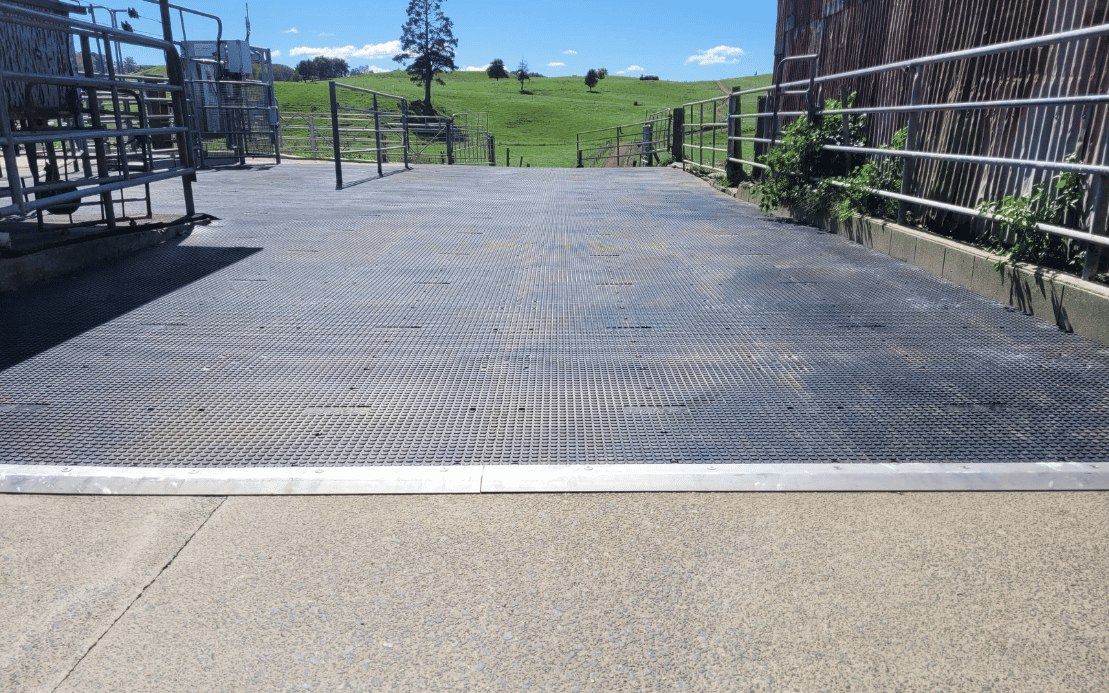
Why do dairy cows slip on concrete floors?
Getting traction right on concrete is harder than it looks. A smooth finish offers too little grip, especially once it's coated in manure and urine. A rough or heavily grooved finish grips better but wears hooves down quickly. Cornell University's guidance on dairy flooring considerations describes a fine line between the two, and notes that the floor finish is often the biggest mistake made during barn construction.
When a cow slips, the damage goes well past a bruised ego. Research cited in the same guidance found that leg joints, ligaments and tendons are the main tissues injured when cows slip and fall on hard surfaces. A single bad fall can mean a lame cow, a lengthy recovery, or an early cull.
Slippery floors also change behaviour. Cows that don't trust their footing walk cautiously, shorten their stride and hesitate at ramps, entries and exits. That slows cow flow at milking and can make cows less willing to show natural behaviours such as mounting during heat, which makes oestrus detection harder.
High-anxiety areas carry the most risk. Ramps, the entry and exit of the dairy shed, and anywhere cows turn sharply or get pushed along by people or backing gates are prime spots for slips, particularly when surfaces are wet.
How do concrete floors cause hoof damage and lameness?
Concrete doesn't give, so every step loads the hoof unevenly. Pressure concentrates on small areas of the sole, and if a claw is already slightly misshapen (as many are), those pressure points become more severe. Over time, this contributes to bruising, sole ulcers and white line disease.
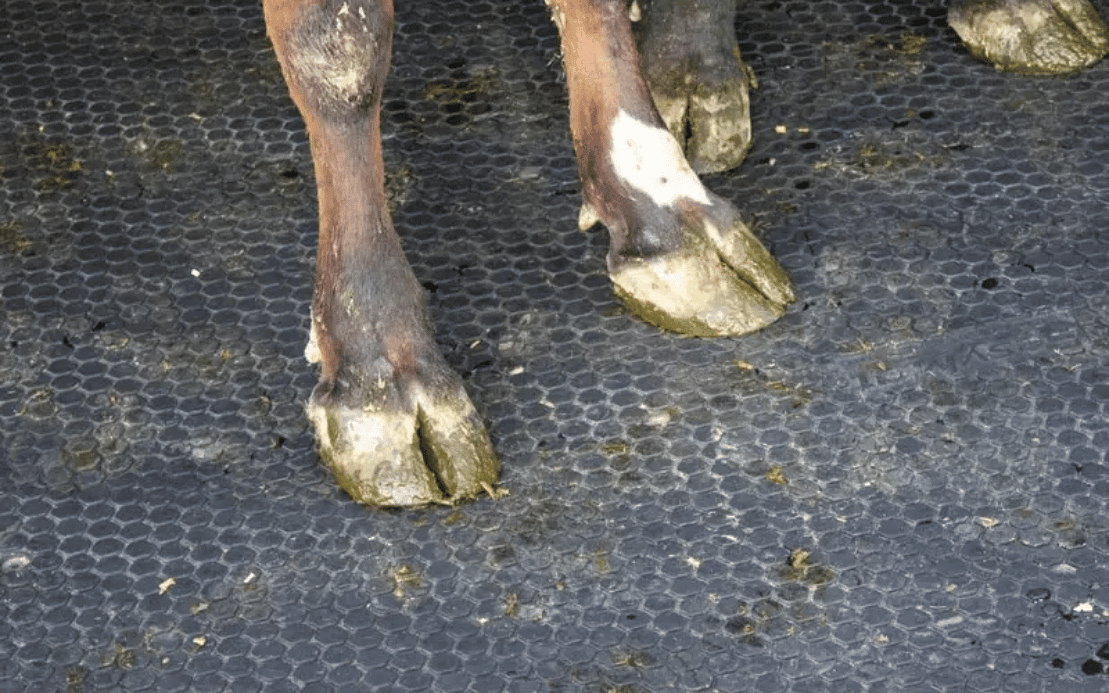
Abrasion is the other half of the problem. Studies referenced by Cornell found that cows on new, abrasive concrete wore their hooves 35% more than cows kept on dirt, and that hooves on freshly laid concrete wore faster than they grew for the first two months. Thin, soft soles bruise easily and leave cows more exposed to stones and grit on tracks and yards.
The result is lameness, one of the most costly health problems on any dairy farm. Lame cows eat less, produce less milk, lose body condition and are slower to get back in calf. Many end up culled early, which adds replacement costs on top of treatment, lost production and extra labour.
It's worth remembering that lameness has several causes, including genetics, nutrition and track condition. Flooring won't fix every case, but it's one of the few risk factors farmers can change directly.

How does concrete flooring affect dairy cow welfare?
Cows need plenty of rest. Cornell's guidance suggests they should spend close to 14 hours a day lying down, and that excessive standing restricts blood flow in the hoof. When the only surface on offer is hard and cold, cows lie down less, stand for longer and put even more load through their feet.
DairyNZ is clear on this point for off-paddock systems. Its loose-housed barn guidance states that cows housed for more than 16 hours a day, over more than three consecutive days, must have access to a well-drained lying area with a soft, compressible surface. It also notes that concrete slats aren't suited to long periods of use and that herd lameness could increase.
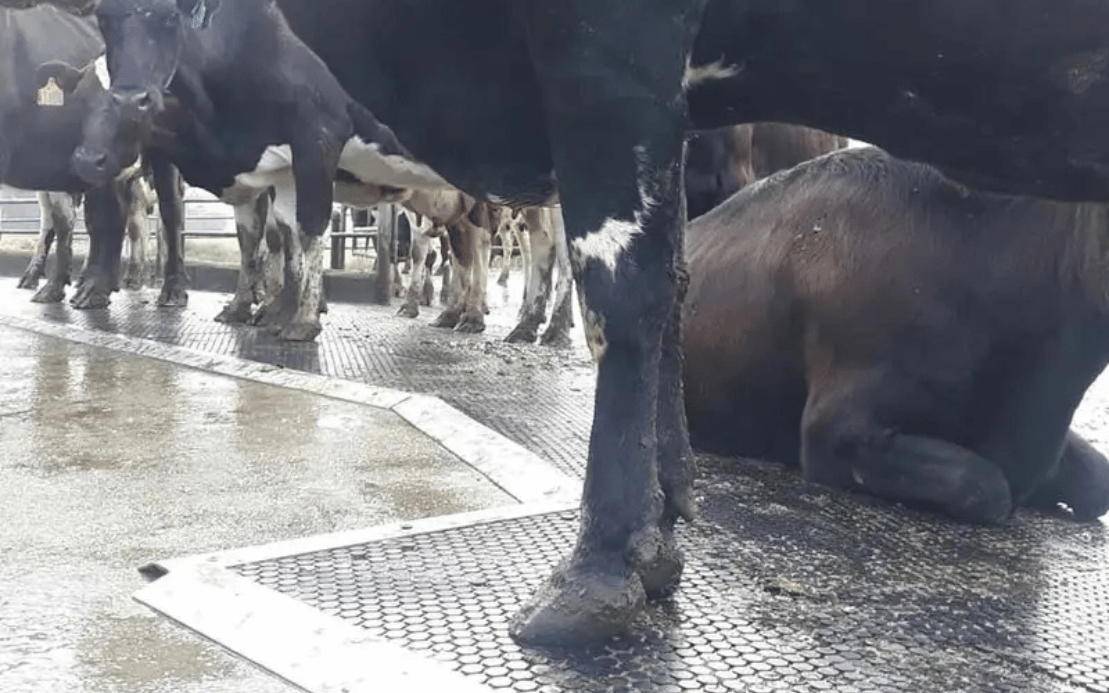
The welfare risks of concrete cow housing surfaces tend to build on each other:
- Less rest, which affects body condition, immunity and milk production
- Joint and hock damage from repeatedly lying down and getting up on a hard floor
- Slip injuries to legs, hips and udders on wet or worn surfaces
- Hoof lesions and lameness from constant pressure and abrasion
- Stress and hesitancy, which slows cow flow and makes handling harder for staff
None of these happens in isolation. A cow with sore feet stands awkwardly, rests poorly and moves cautiously, which in turn raises her risk of slipping again.
How does rubber matting improve dairy cow comfort?
Rubber matting is one of the most practical forms of livestock flooring for dairy farms, adding cushion and grip over the concrete base farmers already have. The hoof sinks in slightly, so load spreads more evenly across the sole. A textured rubber surface also holds traction better than smooth concrete when wet, without the abrasive wear that comes from aggressive grooving.
The biggest gains usually come in the areas where cows stand or move for long periods, or where slips are most likely:
- Dairy shed platforms, where cows stand through every milking
- Entry and exit points, ramps and turns
- Feedpads and feed lanes, where cows stand to eat
- Yards, lanes and high-traffic walkways
- Loose-housed barns and wintering facilities
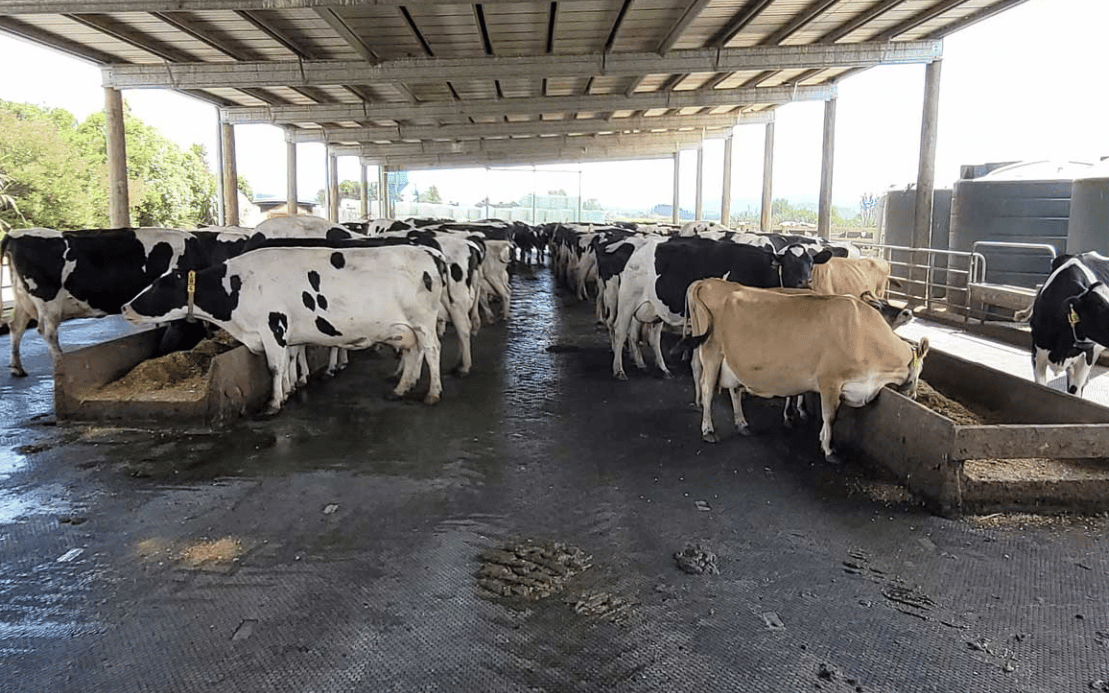
Farmers who make the change often report better cow flow, calmer cows and fewer slipping incidents. Cornell's guidance acknowledges that cows prefer standing and walking on resilient surfaces when given the choice, and suggests floors surfaced with something other than concrete, combined with routine trimming, may prevent many cases of severe lameness.
Matting isn't a cure-all, though. It works best alongside good track maintenance, regular hoof trimming, sensible stocking density and careful stockmanship. The quality of the mat and how it's installed matter too: mats need to sit flat, stay put under scrapers and machinery, and be easy to clean.
Concrete flooring vs rubber matting for dairy cows
Understanding the differences between concrete and rubber flooring can help farmers make more informed decisions about dairy cow comfort and welfare. While concrete provides a durable, easy-to-maintain foundation for dairy infrastructure, rubber matting offers additional cushioning and traction in areas where cows spend extended periods standing and walking.
The table below compares how the two surfaces affect key aspects of dairy cow comfort.
|
Flooring characteristic |
Concrete flooring |
Rubber matting |
|
Cushioning |
Hard, unforgiving surface |
Provides cushioning underfoot |
|
Traction |
Can become slippery when wet |
Textured surface provides additional grip |
|
Hoof wear |
Abrasive surfaces can accelerate hoof wear |
Less abrasive than aggressively grooved concrete |
|
Weight distribution |
Pressure can concentrate on parts of the hoof |
Allows the hoof to sink slightly, helping distribute load |
|
Cow comfort |
Offers little cushioning when standing or walking |
Provides a more resilient standing surface |
|
Installation |
Permanent infrastructure |
Can be installed over existing concrete |
See the difference rubber matting makes on farm
The benefits of rubber matting aren't just theoretical. For one New Zealand dairy farmer, installing EasyMat over cracked concrete transformed the environment in his milking shed without the need for costly and disruptive concrete replacement.
Since installation, he's noticed calmer cows, improved grip, more comfortable resting conditions and a significant reduction in lameness. Previously dealing with around 15 lame cows per month during winter, he now reports just one or two.
Watch his testimonial to hear the difference it's made to his herd and why he wouldn't go back to standard concrete.
How can farmers improve dairy cow flooring?
Dairy farms struggle with concrete cow housing surfaces because the material that suits farm infrastructure so well is a poor match for cow feet. It's either too slippery or too abrasive, it offers no give, and it discourages the rest cows need. As cows spend more time off paddock, those problems add up to more slips, more hoof damage and more lameness.
You don't need to rip out your concrete to improve dairy cattle welfare. Targeted rubber matting in the right places can take much of the strain off your herd while keeping the durability and easy cleaning that made concrete appealing in the first place.
EasyMat supplies hard-wearing, easy-to-clean rubber matting designed for New Zealand dairy sheds, yards and feedpads. Get in touch with the EasyMat team to find the right matting solution for your farm.
