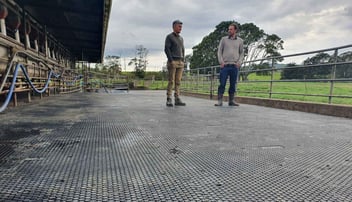
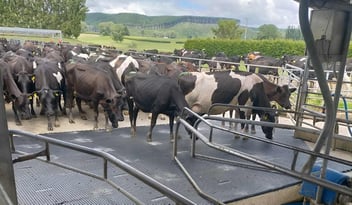
Three quotes for feed pad matting tend to read almost the same on paper. Every supplier promises less lameness and better cow flow, and their prices per square metre usually land within a few dollars of one another.
The differences that decide whether a mat is still doing its job in ten years are the ones that never make it onto a spec sheet. This is a straight comparison of what sets one mat and one supplier apart from the next, and the points worth checking before you sign off on a matting install.
.png?width=1200&height=600&name=Easymat%20-%20blog%20header%20image%20(1).png)
Rubber Matting, Concrete and Woodchip Compared
Concrete is hard, cold and abrasive, which is what drives stone bruising, white line damage and the slips that put cows off coming forward. It earns its place as a base, but as a standing surface it works against hoof health every hour a cow spends on it.
Woodchip looks cheaper on day one, though it holds moisture, harbours bacteria and needs topping up constantly, so the running cost climbs season after season. Rubber matting sits cows on a surface much closer to grass, and the gains in cow flow, lying time and fewer lame cows tend to cover the spend within a few seasons. Which rubber matting to put down takes more thought, and that is where suppliers genuinely differ.
Feed pads and herd homes push more traffic and effluent through matting than almost anywhere else on the farm, so they are the truest test of whether a product is built for the job. To see how a purpose-built option handles a slatted floor or feed pad, take a look at our slat mats for herd homes.

The Four Things Worth Comparing
While many rubber matting systems offer similar benefits, the real differences often come down to how they're built, how long they last and how they perform in day-to-day farm conditions. These are the key factors worth comparing before making a decision.
-
Durability and lifespan – How long a mat lasts comes down to what it's made of and how it stands up to NZ conditions. EasyMat mats use a blend of virgin and recycled rubber and are built for NZ UV, so the edges don't start peeling up in the sun the way some imported mats do.
-
Warranty clarity – Be wary of a big warranty number with nothing behind it. EasyMat mats carry a 10-year warranty, with conditions that come down to one sensible rule, which is the right mat in the right place for the traffic it carries.
-
Cost per year – This is the figure that matters, and it's rarely the one printed on the quote. Divide the price by the realistic life of the mat in your conditions, and a dearer mat that lasts often wins comfortably.
-
Cleaning and compatibility – EasyMat cleans much like a concrete floor and stands up to the usual chemicals. It can be scraped with a tractor scraper where there's no flood wash, the profile lets effluent drain away, and it works with a dung buster on a backing gate, so your wash-down routine stays as it is.
Where EasyMat Pulls Ahead
Most interlocking mats are built from small tiles that lock together, and every join between those tiles is a potential lift point. Under a scraper or heavy machinery, those edges are the first thing to curl, catch and tear, which means a lot of re-laying and a lot of damage that all started at a seam.
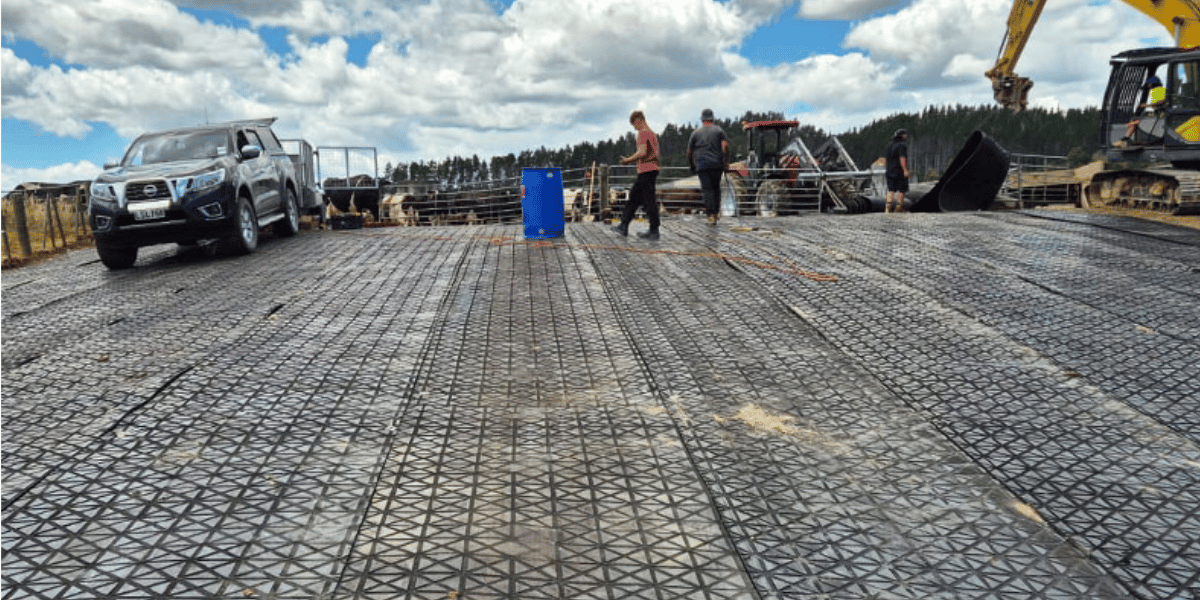
The ZigZag Roll is built differently. It has an integral steel cable system running through it, so it won't stretch or warp over time, and it's supplied in long lengths cut to your exact dimensions. That gives you far fewer joins than a traditional interlocking system, and far less of the lifting and related damage that shortens a mat's life. On a feedpad being scraped every day, fewer joins keep the mat where you laid it rather than in a pile at the end of the run.
The local side matters too. EasyMat has a nationwide presence with offices in Gore, Te Aroha, Christchurch and Hawera and has spent years matching mats to NZ farms, from rotary platforms to underpasses to feed pads, so the advice you get is grounded in conditions you'll recognise.
Dairy farmers running comparable operations tend to report the same change once the mats are down. Cows that used to slip stay on their feet, and the lameness and rising cell counts that came with every wet winter ease off. You can hear them describe it in their own words on the EasyMat success stories page.
How to Make the Call
Get quotes from a few suppliers by all means, but make each of them answer the same questions: how many joins the system has, what the warranty really covers, the cost per year over the mat's true life, and how it copes with your wash-down setup. Lined up that way, the stronger option usually stops being a close call.
When you want those answers for your own feed pad or herd home, the EasyMat team can measure up and talk through which product suits your traffic and layout. A short conversation now saves a lot of re-laying later.
%20(1).jpg?width=352&name=20220301_130749%20(1)%20(1).jpg)